
Smart Agriculture and Food Security
The Smart Agriculture and Food Security Program of EPRC addresses the critical challenges facing Bangladesh’s agricultural sector, including climate change, flooding, erratic rainfall, soil degradation, land fragmentation, satellite forecasted irrigation, floating agriculture, and limited access to modern farming technologies. These challenges significantly undermine crop productivity and food security, particularly in rural areas.
EPRC promotes sustainable agricultural practices through its extensive experience in farmer-centered projects on rice production, seed multiplication, harvesting, irrigation, homestead gardening, tree plantation, farmers’ occupational safety, balanced fertilizer application, and environmental sustainability.
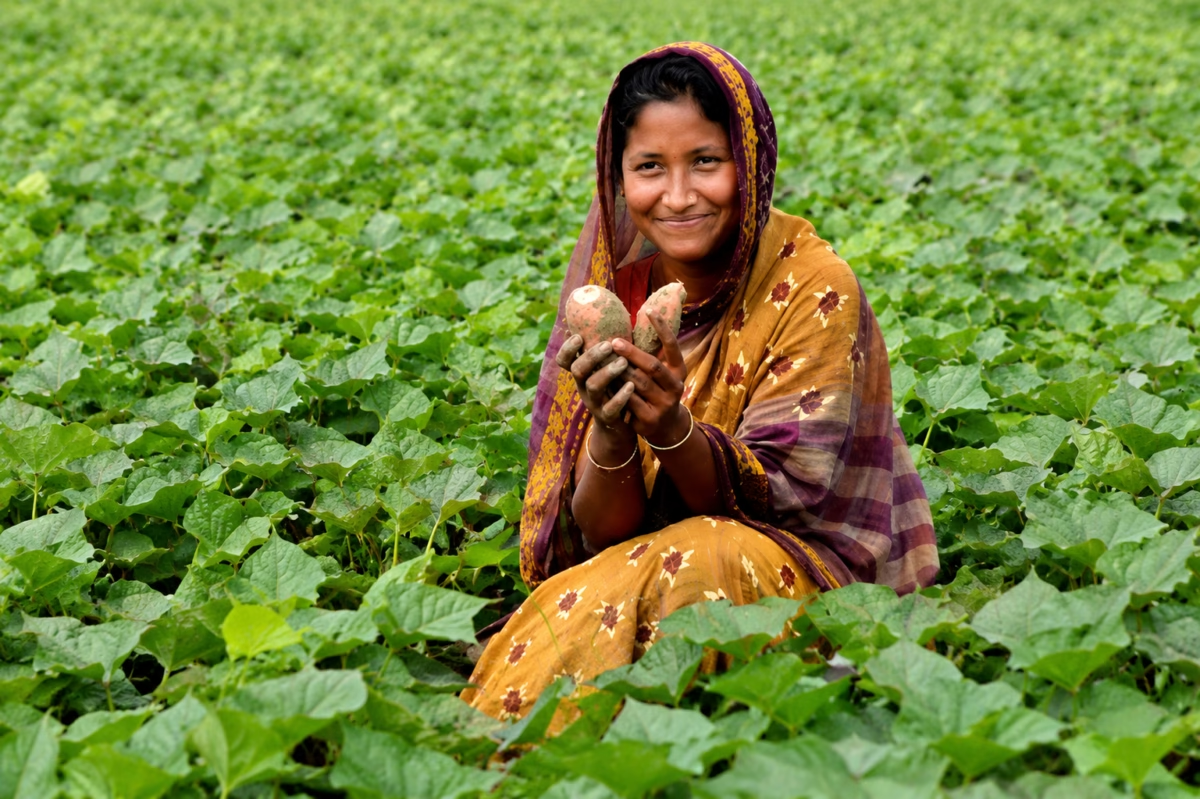
The program emphasizes participatory approaches to strengthen farmers’ knowledge and capacities, foster collaboration among rural organizations and local and central government institutions, and encourage inclusive planning for resource development.
EPRC also actively supports women farmers’ groups and farmers’ field schools, and advances innovative, eco-friendly solutions such as organic agriculture, vermicomposting, biorational attractant-based pest management, and integrated pest management (IPM). These interventions are contributing to improved agricultural productivity, climate resilience, and nutritional outcomes.
Areas of Expertise:
- ◈Food value chain strengthening and market linkage development
- ◈Women’s empowerment and youth engagement in agri-food systems
- ◈Community-based adaptation (CBA) in agriculture
- ◈Post-harvest management and food loss reduction
- ◈Organic and ecological agriculture practices
- ◈Climate-smart integrated pest & disease management (IPM)
- ◈Crop diversification and optimum land-use planning
- ◈Green technology and green growth for reduced resource exploitation
- ◈Agricultural seasonal planning and drought-resilient farming
- ◈Soil health management and reconnaissance soil surveys
- ◈Saline-tolerant and stress-resilient agriculture
- ◈Homestead, vegetable, and herbal gardening systems
- ◈High-yielding variety (HYV) crop and rice seed production
- ◈Food preservation, post-harvest handling, and storage capacity building
- ◈Food Security through fish culture, poultry, and livestock farming
- ◈Indigenous knowledge-based agricultural programs
- ◈Digital and precision agriculture for smallholders
- ◈Agricultural technology dissemination, uptake, and info services