Environmental Health
EPRC’s Environmental Health addresses the growing public health risks driven by rapid urbanization, environmental degradation, and climate change across Bangladesh. The program delivers evidence-based solutions to improve environmental health outcomes, supported by EPRC’s Environmental Laboratory, which conducts physical, chemical, and biological testing of water and wastewater.
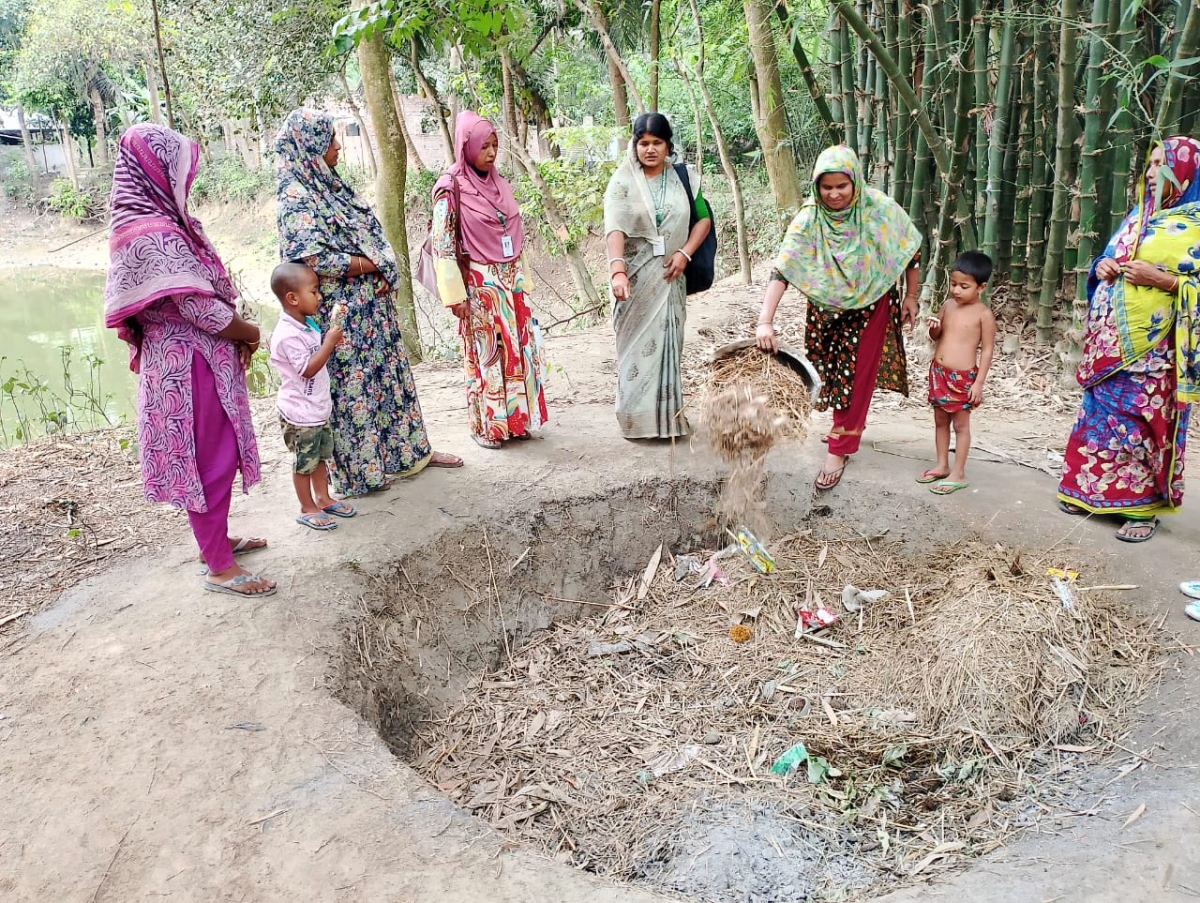
EPRC brings extensive experience in tackling both indoor and ambient air pollution and its health impacts, as well as communicable and non-communicable diseases, occupational health and safety, and the prevention of COVID-19 and dengue. To reach the most vulnerable populations, the organization conducts community health camps at the grassroots level in rural areas and operates makeshift clinics to provide essential environmental health services.
Air pollution and plastic waste remain two of the most urgent threats to public health. In collaboration with Emory University (USA), EPRC has launched low-cost, high-resolution air quality monitoring to generate real-time, location-specific data on PM2.5 levels in Dhaka and surrounding areas. Additionally, working with the University of Rhode Island (USA), EPRC piloted behavior-based “nudge” interventions in Dhaka’s markets to reduce single-use plastic bag consumption. These low-cost, culturally adapted strategies shift consumer behavior and vendor practices—complementing regulatory efforts with community-driven solutions to combat plastic pollution in rivers, drainage systems, and urban environments.
Areas of Expertise:
- ◈Environmental Health Risk Assessment
- ◈Occupational and Workplace Environmental Health (informal sector, agriculture, small industries)
- ◈Vector Control and Prevention of Environment-Related Diseases (dengue, malaria, chikungunya)
- ◈School and Healthcare Facility Environmental Health
- ◈Indoor Air Pollution and Clean Cooking Solutions
- ◈Food Safety and Environmental Hygiene
- ◈Solid waste and Wastewater management
- ◈Fecal sludge management (FSM)
- ◈Environmental Health Behavior Change Communication (BCC) and community awareness